THE NUMBERS TELL THE STORY
The arts and culture sector contributed $85 billion to Canada's GDP in 2007 (7.4% of Canada's real GDP).
SOURCE: Valuing Culture: Measuring and Understanding Canada's Creative Economy, Conference Board of Canada, 2008
http://www.conferenceboard.ca/documents.aspx?did=2671
The cultural sector generated approximately $25 billion in taxes for all levels of government in 2007. This is more than three times higher than the $7.9 billion that was spent on culture by all levels of government in 2007.
SOURCE: Valuing Culture: Measuring and Understanding Canada's Creative Economy, Conference Board of Canada, 2008
http://www.conferenceboard.ca/documents.aspx?did=2671
The cultural sector has about 600,000 workers, which is about double the level of employment in the forestry sector in Canada (300,000) and more than double the level of employment in Canadian banks (257,000).
SOURCE: A Statistical Profile of Artists in Canada : Based on the 2006 Census, Hill Strategies Research, 2009
http://www.hillstrategies.com/resources_details.php?resUID=1000300
In 2005, two thirds of Canadians read a book (66.6%), one in two attended a performance by professional artists or a cultural festival (48.8%), and one in four visited an art gallery (26.7%).
SOURCE: General Social Survey, Statistics Canada, 2005
http://www.hillstrategies.com/resources_details.php?resUID=1000223
In 2008, Canadians spent more than twice as much on live performing arts ($1.4 billion) than on sports events ($0.65 billion).
SOURCE: Survey of Household Spending, Statistics Canada, 2008
http://www.artsresearchmonitor.com/article_details.php?artUID=50638
The arts are important for personal health and well-being, having an impact on personal confidence, sense of control, social connectedness, education, and ensuring supportive physical environments.
SOURCE: Arts and Culture in Medicine and Health: Survey Research Paper, Cooley & Associates, 2003
http://www.surlesarts.com/article_details.php?artUID=50370
The Canadian Arts Coalition is a national, non-partisan movement made up of business leaders and arts philanthropists, sponsors and volunteers, artists and arts organizations. We are united in the belief that the future of our citizens, their towns and cities, and indeed, the nation itself depends on access to a rich, vibrant and diverse arts community.
http://www.canadianartscoalition.com/
http://www.lacoalitioncanadiennedesarts.com/
email/courriel: info@canadianartscoalition.com
Twitter: @artscoalitionca
Facebook: http://www.facebook.com/artscoalition
Sunday, June 12, 2011
Thursday, June 09, 2011
Yellowknfie Community Foundation call for photos
Janet Pacey [janetpacey@ssimicro.com] on behalf of Yellowknife
Community Foundation has requested distribution of the following
announcement:
>Yellowknfie Community Foundation
>
>Call for Photos!
>
>Deadline: July 30th
>
>The Yellowknife Community Foundation is looking for photos for their
>Annual Report Calendar. It's a great opportunity to have your photo
>featured in print that will be seen by over 1000 friends of the
>Foundation. We're looking for action and beauty in the Yellowknife
>area.
>
>If your photo is chosen you will receive $75, photo credit and a
>printed copy of the calendar. Complete rules and regulations are
>available by request.
>
>To submit please email: janetpacey@ssimicro.com
>
>Please ensure that submissions are:
>o landscape format (wider than tall)
>o of Yellowknife and area
>o high resolution digital format only, 10 x 8" at 300 dpi
>(3000 x 2400 px)
>
>Include your name, email, phone number and name / description of
>photo.
>
>For more information, please call 444-8470 or email
>janetpacey@ssimicro.com.
>
>- - - - - - - - - -
>Janet Pacey, CGD
>4910 50th Street
>Yellowknife, NT
>867.444.8470
>
>www.janetpacey.com
>
announcement:
>Yellowknfie Community Foundation
>
>Call for Photos!
>
>Deadline: July 30th
>
>The Yellowknife Community Foundation is looking for photos for their
>Annual Report Calendar. It's a great opportunity to have your photo
>featured in print that will be seen by over 1000 friends of the
>Foundation. We're looking for action and beauty in the Yellowknife
>area.
>
>If your photo is chosen you will receive $75, photo credit and a
>printed copy of the calendar. Complete rules and regulations are
>available by request.
>
>To submit please email: janetpacey@ssimicro.com
>
>Please ensure that submissions are:
>o landscape format (wider than tall)
>o of Yellowknife and area
>o high resolution digital format only, 10 x 8" at 300 dpi
>(3000 x 2400 px)
>
>Include your name, email, phone number and name / description of
>photo.
>
>For more information, please call 444-8470 or email
>janetpacey@ssimicro.com.
>
>- - - - - - - - - -
>Janet Pacey, CGD
>4910 50th Street
>Yellowknife, NT
>867.444.8470
>
>www.janetpacey.com
>


Thursday, June 02, 2011
Uranium film festival of Brazil
---------- Forwarded message ----------
From: Documentary Field Notes and Flashpoints <misac@socialdoc.net>
Date: 2 June 2011 05:05
Subject: Documentary Field Notes and Flashpoints
To: mediamentor@gmail.com
From: Documentary Field Notes and Flashpoints <misac@socialdoc.net>
Date: 2 June 2011 05:05
Subject: Documentary Field Notes and Flashpoints
To: mediamentor@gmail.com
Documentary Field Notes and Flashpoints |

| Uranium film festival of Brazil Posted: 01 Jun 2011 10:15 PM PDT 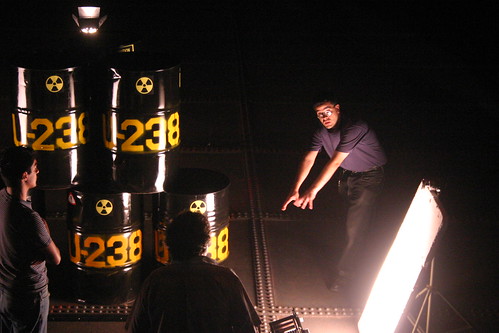 "Uranium 238: La bomba sucia del Pentágono"selected as one of the eight best films of the Uranium Film Festival of Rio de Janeiro 2011. One of my films, Uranium (NFB 1990) was selected to participate in the first international Uranium Film Festival in Brazil, which just ended. As Brazil is not known for its uranium or nuclear industry, I found this intriguing. I put some questions to Marcia Gomez de Oliveira, the Director of the Festival, and the director of programming Norbert G. Suchanek. 1. Why a festival of films on uranium? Marcia Gomes de Oliveira: Because nuclear power plants cannot exist without uranium mining. And that factor is still not known to the general population or society. Also totally unknown to the public here in Brazil and in Latin America are the environmental and social consequences and the negative health effects of uranium mining and other installations of the complex nuclear energy industry. Our film festival wants to change that, wants to "popularize" this important information. Most of the documentaries and movies about uranium, mining, nuclear energy or the Chernobyl disaster have never been shown in Brazil and were never translated into our language, Portuguese. There is a huge language barrier between the English and Portuguese-speaking world. Our festival is the first step in breaking down that wall. In addition, of course we want to stimulate filmmakers, especially filmmakers from Latin America and from Portuguese-speaking African countries, to produce documentaries and movies on nuclear and radioactive subjects.
And why in Brazil? Marcia: Because we have nuclear power plants and uranium mines. And, starting with ex-president Lula da Silva, the Brazilian government wants not only to triple the production of Yellow Cake but also in the near future export enriched uranium. That is not all. The government is now constructing a third nuclear power plant, Angra 3, and wants to build up to 40 or 50 new nuclear power plants all over Brazil. Our government wants to transform our country into a globally important nuclear power. The Brazilian people until today have not been aware of this huge nuclear program. And we have to discus it, before it becomes reality, before it is too late. Why on uranium and not for example hydroelectric dams? The nuclear or uranium question is as important as the question of hydroelectric dams. The difference is that in Brazil, since the 1980s people already know about the negative effects of the big dams and hydroelectric power plants like Itaipu, Tucurui or Balbina. They are visible. However, the effects of radioactivity, the effects of uranium mining are not yet visible in our society. For that, we are working to spread independent information in form of documentaries about the whole nuclear energy complex and the radioactive risks. 2. For Norbert: You have seen pretty much everything that's been done on uranium mining and its consequences over the last 30 years (40, right ?) Norbert: As journalist and activist born in formerly West Germany, I followed the nuclear question for more than 30 years now. In Europe, "uranium mining" was always a forgotten subject because most of the uranium mining happens in other continents. The huge uranium mine of East Germany was also "forgotten" because it was simply a secret behind the Iron Curtain. The huge problems in the uranium mines of Portugal were not questioned outside of Portugal because of the language barrier and because that small country in the edge of Europe was not part of the early European Community. Therefore, for decades uranium mining was not visible to the European public and to most of the people worldwide.
Looking at all of them, what role has documentary played with respect to this issue? Documentaries have been one of the most important vehicles to bring the uranium case into the public. Like I said, mining was not visible for the people, because it happened in secrecy or in other countries. Until today, the question of Nuclear Energy has been mainly fixed on the question of "Nuclear Waste" from nuclear power plants and nuclear accidents. Starting with documentaries about uranium mining in Australia, documentaries about the fight of indigenous peoples against mines, people in the industrialized nations are becoming slowly aware that the fuel of Nuclear Power plants do not come from heaven. But will require many more documentaries to inform all of our societies, so that the people and their politicians can make correct and wise decisions in future. Can you mention a couple of films which stand out ? First of all your documentary Uranium and this is not because I want to be polite. Your documentary is simply a good piece of work with impressive images and one of the first that explores the consequences of uranium mining in Canada in a profound way. From the other films that we selected for our festival, I personally like very much the documentary Fight for Country (the story of the Jabiluka Blockade) from Pip Starr, a film director who sadly died far too young. In the year 1998, Pip Starr spent over a year working with the aboriginal Mirrar people opposing a second uranium mine on their land. Finally, thousands of people from all over Australia traveled to the Kakadu National Park to join the Mirrar in their struggle. Produced in 2001, Fight for Country shows that people who stand up against uranium mining are not alone! The third documentary I want to mention is a new production by film director Klara Sager from Sweden. The location of "Under the surface – Om bergen faller sönder" produced in 2010/11 is the Hotagen, a mountain area in the North of Sweden. Young, well-educated geo-engineers and technicians are hiking through a beautiful landscape in search for uranium, without any feeling, about what will happen to that amazing place of earth if one day uranium mining starts. On the other side, you have normal local people, elderly, who do not want uranium mining nor uranium prospecting happen in their land. It is interesting to see, that Swedish people who are against uranium mining are not young students or "hippy"-type activists, but normal, elderly people. Under the surface also brings to light another kind of modern generation conflict – technicians and engineers fresh from the university working for international mining companies against elderly local people, grocery shopkeepers, housewives and the indigenous Sami, reindeer herders, with a totally different concept of nature and living. Thanks to Tobi Elliott for her help with the blog. |
| You are subscribed to email updates from Documentary Field Notes and Flashpoints To stop receiving these emails, you may unsubscribe now. | Email delivery powered by Google |
| Google Inc., 20 West Kinzie, Chicago IL USA 60610 | |
Change in Up Here mag's Photo Contest Rules
Finally, they now say " All images remain copyright of the photographer. Winning images, however, may be used in promotional material for future contests. Up Here will contact and compensate photographers whose entries merit usage in other promotional material or editorial content."
http://uphere.ca/node/712
Tuesday, May 31, 2011
This Is The World’s Highest Resolution Picture Ever Taken
This Is The World's Highest Resolution Picture Ever Taken
http://ow.ly/57frg
Zoomable version here
http://ow.ly/57fsx
[excerpt]
http://ow.ly/57frg
Zoomable version here
http://ow.ly/57fsx
[excerpt]
In an attempt to break new ground and always push the boundaries, Halta Definizione has created the world's highest ever resolution in a picture. Or actually, the image consists of 1,677 different shots and is then stitched together to make a truly amazing, if not wondrous picture where depth gets a new meaning.
So what is this picture portraying? Well, it wouldn't be right if it wasn't Leonardo da Vinci's "The Last Supper". The depth of the image is just mind boggling. You can zoom down to the smallest grain of paint and still not lose the clarity or the crispness of the image itself. It's really amazing to zoom and pan around in search of those infamous details that we all know of since the movie "The Da Vinci Code" by Dan Brown.
The original 15 by 30 foot painting was photographed over a period of 9 hours and later meticulously stitched together where the tapestry of images finally became a fully viewable and zoom-able image. This image has never before been seen in it's full scale on the Internet.
Monday, May 30, 2011
How much longer can photographic film hold on?
[Excerpt]
ROCHESTER, N.Y. (AP) -- At Image City Photography Gallery, Gary Thompson delights in pointing out qualities of light, contrast and clarity in one of his best-selling prints - a winter-sunset view of Yosemite National Park's El Capitan peak shot with a hefty Pentax film camera he bought in 1999 for $1,700.
His wife, Phyllis, a latecomer to fine-art photography after they retired from teaching in the 1990s, favors a Hasselblad X-Pan for panoramic landscapes, such as a time-lapse shot of a harbor in Nova Scotia.
Of 11 partners and resident artists at the private gallery in Rochester - the western New York city where George Eastman transformed photography from an arcane hobby into a mass commodity with his $1 Brownie in 1900 - the Thompsons are the only ones left who haven't switched to filmless digital cameras.
But that time may be near.
"I like the color we get in film, the natural light," says Phyllis Thompson, 70, who married her high-school sweetheart 50 years ago. "But digital cameras are getting much better all the time, and there will come a time when we probably won't be able to get film anymore. And then we'll have to change."
More at
or How much longer can photographic film hold on?
Tuesday, May 17, 2011
NDP unveils new arts caucus, seeks to better fund field
OTTAWA — The NDP unveiled its star-studded arts and culture caucus Tuesday with a call for more funding for the Canada Council for the Arts and the adoption of income-averaging for artists.
While the group arrived with few figures to back up their demands and little in the way of a concrete plan, they brushed off the criticism, suggesting the real goal is to highlight the expertise the party plans to bring to the table.
"The new NDP arts and heritage caucus will be the strongest arts caucus in the history of the Canadian Parliament," veteran New Democrat and one-time Juno nominee Charlie Angus said before introducing his new colleagues.
Saturday, May 14, 2011
Journalism in Conflict Zones - Free Webinar
(May well apply to reporting on Yellowknife's 50th Street!)
A Newspapers Canada webinar next week.
A Newspapers Canada webinar next week.
please visit:
https://www2.gotomeeting.com/register/370213947
Subject: Journalism in Conflict Zones - Free Webinar
Journalism in Conflict Zones - Free Webinar
Wed, May 18, 2011 12:00 PM - 1:00 PM EST
Cost: Free
Format: Webinar
Length: 30 minutes
Military personnel are highly trained to react in intense situations – but what about the journalists covering the story?
Athabasca University in Alberta has collaborated with the Department of National Defense to create a practicum course for journalism graduates and students interested in learning about reporting from a war zone in a mock-Kandahar site at CFB Wainwright.
The unique course offers participants a one-of-a-kind opportunity to experience simulated conflict zones while receiving mentorship from experienced war correspondents.
Students participate in combat exercises in scenarios that change daily.
The webinar is free to attend and participants are encouraged to ask questions following the presentation.
Sponsored by Newspapers Canada
REGISTER
https://www2.gotomeeting.com/register/370213947
----------
MISSED A WEBINAR? Need some inspiration?
Download recordings of past webinars and view at your leisure.
https://www.cna-acj.ca/cart/cart.php?m=product_detail&p=19
https://newspaperscanada.ca/cart/cart.php?m=product_list&c=3
VIEW WEBINAR ARCHIVES
QUESTIONS? Email <mailto:info@newspaperscanada.ca>info@newspaperscanada.ca
http://www.newspaperscanada.ca
https://www2.gotomeeting.com/register/370213947
Subject: Journalism in Conflict Zones - Free Webinar
Journalism in Conflict Zones - Free Webinar
Wed, May 18, 2011 12:00 PM - 1:00 PM EST
Cost: Free
Format: Webinar
Length: 30 minutes
Military personnel are highly trained to react in intense situations – but what about the journalists covering the story?
Athabasca University in Alberta has collaborated with the Department of National Defense to create a practicum course for journalism graduates and students interested in learning about reporting from a war zone in a mock-Kandahar site at CFB Wainwright.
The unique course offers participants a one-of-a-kind opportunity to experience simulated conflict zones while receiving mentorship from experienced war correspondents.
Students participate in combat exercises in scenarios that change daily.
The webinar is free to attend and participants are encouraged to ask questions following the presentation.
Sponsored by Newspapers Canada
REGISTER
https://www2.gotomeeting.com/register/370213947
----------
MISSED A WEBINAR? Need some inspiration?
Download recordings of past webinars and view at your leisure.
https://www.cna-acj.ca/cart/cart.php?m=product_detail&p=19
https://newspaperscanada.ca/cart/cart.php?m=product_list&c=3
VIEW WEBINAR ARCHIVES
QUESTIONS? Email <mailto:info@newspaperscanada.ca>info@newspaperscanada.ca
http://www.newspaperscanada.ca
Friday, May 13, 2011
Registration OPEN: WAMP 48 hour music video competition
---------- Forwarded message ----------
From: Jeremy - Western Arctic Moving Pictures <jeremy@wamp.ca>
Date: 9 May 2011 16:32
Subject: Registration OPEN: 48 hour music video competition
To:
 Once again its that time of year....
From: Jeremy - Western Arctic Moving Pictures <jeremy@wamp.ca>
Date: 9 May 2011 16:32
Subject: Registration OPEN: 48 hour music video competition
To:
The 48 HOUR MUSIC VIDEO COMPETITION will commence on Saturday June 4th, at noon and entries will be due on Monday June 6th at noon. The event is where bands and video teams are paired up at noon on Saturday and they have 48 hours to produce a music video and are later judged and awarded prizes! Editing Suites and Equipment are available for use as part of the competition.
Registration is open for BANDS & VIDEO TEAMS
Space is limited, please contact WAMP ASAP to register!
*****CASH PRIZE*******PRODUCTION GRANT PRIZE*********** OTHER PRIZES TBA*********
*NEW REQUIREMENT [in order to register EVERYONE must obtain a WAMP membership or pay similar fee]
Jeremy Emerson - Executive Director
Western Arctic Moving Pictures Film Society
4916 49th street (basement of northway bldg]
PO BOX 2487
Yellowknife, NT
X1A 2P8
Sunday, May 01, 2011
Nikon’s Image authentication system cracked
ElecomSoft, a privately owned company in the heart of Russia (Moscow) has fiddled around with Nikon's Image authentication software and managed to let a forged photo pass for a genuine one. Nikon originally created their authentication system to inhibit an uneditted image to be manipulated and being sold for original/raw.
Forged photos are nowadays so common for false political statements, legal evidence & business affairs that can define or totally destroy an individual or company's name and/or carreer. So Nikon thought it invented the perfect software to validate if a photo was taken with their camera and if it was modified in any way.
more...
Tuesday, April 26, 2011
Scholarship offered to photographer to attend Italy workshop [Worldwide]
Photojournalists under 35 years old can apply for a scholarship to attend a workshop.
http://ijnet.org/opportunities/scholarship-offered-photographer-attend-italy-workshop-worldwide
The Alexandra Boulat Scholarship, sponsored by the Toscana Photographic Workshop, gives a photographer the opportunity to attend a summer workshop in Tuscany for free and work under the guidance of top professional photographers. To view a full list of teachers, click here.
During the workshop, teachers will examine portfolios brought by students, conduct technical classes and help students produce new work. The workshop will also focus on how to publish photography and create a portfolio.
The scholarship does not include accommodation. For more information, click here.
Saturday, April 23, 2011
David Hobby - changed the photography business forever.
David Hobby
A Baltimore Sun photographer who took a buyout, started a blog, and changed the photography business forever.
http://www.slate.com/id/2291603/
[excerpt]
At first glance, David Hobby looks like just another casualty of the decline of print media: A longtime staff photographer for the Baltimore Sun, he was one of many employees who accepted a buyout in 2008 as part of broad staff reductions at the distressed newspaper.
Yet last month he embarked on a sold-out, cross-country tour that will visit 29 cities. Approximately $1 million in tickets have been sold for the privilege of hearing Hobby and famed magazine photographer Joe McNally speak about their craft. Hobby's blog, Strobist, on which he teaches amateurs the lighting techniques used by professionals, welcomed 2 million unique visitors last year. (The largest professional photography association has a membership 1 percent of that size.) Manufacturers have named lines of equipment after him, an unheard-of honor.
How Hobby went from being a workaday newspaper photographer to an internationally recognized guru is a story tied up with seismic changes in the photography profession. By teaching a horde of novices the skills necessary to shoot photographs of a quality that was until very recently only within the grasp of an elite few, Hobby has played a significant role in the transformation of the profession. In the last few years, the market rate for many types of professional photographs has dropped by as much as 99 percent.
Wednesday, April 06, 2011
The World's Smallest 1080p 3D video and photo Camera
The 3D HERO System allows you to combine two 1080p HD HERO cameras into a single housing to record 3D video and photos while simultaneously recording in 2D. A synchronization cable plugs into the rear HERO Port on both cameras to join them together, enabling both cameras to record video and photos in perfect synchronization. This is a requirement for professional quality 3D and is available only from GoPro.
The included 3D editing software—GoPro Cineform Studio—makes it easy to convert your 3D HERO System footage into viewable 3D files you can watch on your computer, online at sites like YouTube, and on your 2D or 3DTV at home.
http://gopro.com/hd-hero-accessories/3d-hero-system/
The included 3D editing software—GoPro Cineform Studio—makes it easy to convert your 3D HERO System footage into viewable 3D files you can watch on your computer, online at sites like YouTube, and on your 2D or 3DTV at home.
http://gopro.com/hd-hero-accessories/3d-hero-system/
What's Included:
- 3D Waterproof Housing
- 3D Waterproof Door + Skeleton Door
- 3D Hero Sync Cable
- 3D Anaglyph Glasses (3 pairs)
- Helmet Front Mount
- 2 Flat + 2 Curved Adhesive Mounts
- Assorted Mounting Hardware
Monday, April 04, 2011
#artsvotecan #Elxn41 #CdnPoli Arts Vote Toolkit - KEY STATISTICS ON CANADIAN ARTS AND CULTURE
Arts Vote Toolkit
KEY STATISTICS ON ARTS AND CULTURE
The arts and culture sector contributed $85 billion to Canada's GDP in 2007 (7.4% of Canada's real GDP).
SOURCE: Valuing Culture: Measuring and Understanding Canada's Creative Economy, Conference Board of Canada, 2008
http://www.conferenceboard.ca/documents.aspx?did=2671
The cultural sector generated approximately $25 billion in taxes for all levels of government in 2007. This is more than three times higher than the $7.9 billion that was spent on culture by all levels of government in 2007.
SOURCE: Valuing Culture: Measuring and Understanding Canada's Creative Economy, Conference Board of Canada, 2008
http://www.conferenceboard.ca/documents.aspx?did=2671
The cultural sector has about 600,000 workers, which is about double the level of employment in the forestry sector in Canada (300,000) and more than double the level of employment in Canadian banks (257,000).
SOURCE: A Statistical Profile of Artists in Canada : Based on the 2006 Census, Hill Strategies Research, 2009
http://www.hillstrategies.com/resources_details.php?resUID=1000300
In 2005, two thirds of Canadians read a book (66.6%), one in two attended a performance by professional artists or a cultural festival (48.8%), and one in four visited an art gallery (26.7%).
SOURCE: General Social Survey, Statistics Canada, 2005
http://www.hillstrategies.com/resources_details.php?resUID=1000223
In 2008, Canadians spent more than twice as much on live performing arts ($1.4 billion) than on sports events ($0.65 billion).
SOURCE: Survey of Household Spending, Statistics Canada, 2008
http://www.artsresearchmonitor.com/article_details.php?artUID=50638
The arts are important for personal health and well-being, having an impact on personal confidence, sense of control, social connectedness, education, and ensuring supportive physical environments.
SOURCE: Arts and Culture in Medicine and Health: Survey Research Paper, Cooley & Associates, 2003
http://www.surlesarts.com/article_details.php?artUID=50370
ARTS VOTE VOTE CULTURE CANADA
CANADIAN ARTS COALITION
http://www.canadianartscoalition.com
Arts Vote Toolkit
http://www.canadianartscoalition.com/2011/03/30/federal-election-2011-2/
KEY STATISTICS ON ARTS AND CULTURE
The arts and culture sector contributed $85 billion to Canada's GDP in 2007 (7.4% of Canada's real GDP).
SOURCE: Valuing Culture: Measuring and Understanding Canada's Creative Economy, Conference Board of Canada, 2008
http://www.conferenceboard.ca/documents.aspx?did=2671
The cultural sector generated approximately $25 billion in taxes for all levels of government in 2007. This is more than three times higher than the $7.9 billion that was spent on culture by all levels of government in 2007.
SOURCE: Valuing Culture: Measuring and Understanding Canada's Creative Economy, Conference Board of Canada, 2008
http://www.conferenceboard.ca/documents.aspx?did=2671
The cultural sector has about 600,000 workers, which is about double the level of employment in the forestry sector in Canada (300,000) and more than double the level of employment in Canadian banks (257,000).
SOURCE: A Statistical Profile of Artists in Canada : Based on the 2006 Census, Hill Strategies Research, 2009
http://www.hillstrategies.com/resources_details.php?resUID=1000300
In 2005, two thirds of Canadians read a book (66.6%), one in two attended a performance by professional artists or a cultural festival (48.8%), and one in four visited an art gallery (26.7%).
SOURCE: General Social Survey, Statistics Canada, 2005
http://www.hillstrategies.com/resources_details.php?resUID=1000223
In 2008, Canadians spent more than twice as much on live performing arts ($1.4 billion) than on sports events ($0.65 billion).
SOURCE: Survey of Household Spending, Statistics Canada, 2008
http://www.artsresearchmonitor.com/article_details.php?artUID=50638
The arts are important for personal health and well-being, having an impact on personal confidence, sense of control, social connectedness, education, and ensuring supportive physical environments.
SOURCE: Arts and Culture in Medicine and Health: Survey Research Paper, Cooley & Associates, 2003
http://www.surlesarts.com/article_details.php?artUID=50370
ARTS VOTE VOTE CULTURE CANADA
CANADIAN ARTS COALITION
http://www.canadianartscoalition.com
Arts Vote Toolkit
http://www.canadianartscoalition.com/2011/03/30/federal-election-2011-2/
Sunday, March 27, 2011
Frozen Eyes photography workshp in Norman Wells, NWT

©2011 Tamara McDonald
Konrad Grandjambe, student (Left) with George Lessard, trainer (Right) at a digital photography workshop in Norman Wells, NWT http://www.frozeneyes.com
Friday, March 25, 2011
Eddie Adams 2011 Barnstorm Photographic Workshop
The premier photography workshop for students and young professionals | Eddie Adams Workshop
http://ow.ly/4msHT tuition-free, and the 100 students are chosen based on the merit of their portfolios.
http://ow.ly/4msHT tuition-free, and the 100 students are chosen based on the merit of their portfolios.
 | Nikon is the Official Sponsor of Barnstorm: The Eddie Adams Workshop |
Saturday, March 19, 2011
Global Union Video Contest
--------- Forwarded message ----------
From: Derek Blackadder <dblackadder@cupe.ca>
Date: 19 March 2011 04:53
Subject: Global Union Video Contest
To:
Date: 19 March 2011 04:53
Subject: Global Union Video Contest
To:
Online videos are becoming pretty common in the union world, as elsewhere. If you have produced one or if you have enjoyed a union video that you think deserves wider attention, nominate it for the LabourStart Video of the Year award.
Info on how to nominate, as well as last year's winners and this year's current nominees can be found here:
http://www.labourstart.org/lvoty/2011/
==================
Derek Blackadder
LabourStart Canada
blackadderonline.blogspot.com/
705-930-3724
Skype, Flickr and Twitter: dblackadder
P
Do you really have to print this email?
Thursday, March 17, 2011
FrozenEyes @ the Mackenzie Mountain School March 21 to 25 in NORMAN WELLS #NWT
As posted on the Norman Wells
George Lessard and Pablo Saravanja of
Frozen Eyes Photographic Society of the NWT www.frozeneyes.com will be giving a photographic workshop for students at
Mackenzie Mountain School March 21 to 25;
so smile when the students ask to
take your picture!
Contact Thomas Aikman at
Mackenzie Mountain School (587-2286)
for more information.
Community Channel
http://www.normanwells.com/lifestyle/community-channelGeorge Lessard and Pablo Saravanja of
Frozen Eyes Photographic Society of the NWT www.frozeneyes.com will be giving a photographic workshop for students at
Mackenzie Mountain School March 21 to 25;
so smile when the students ask to
take your picture!
Contact Thomas Aikman at
Mackenzie Mountain School (587-2286)
for more information.
Captured memories with Helping Hearts photographers
[excerpt]
"Helping Hearts is an organization that is Canada wide providing free photography sessions for families with children who are disabled, sick or ill," says representative Brandy Jackson. "The family gets a free session with a disk of 20 to 30 images, and free 8" x 10" print of their choice."
The founders Melissa Knowles and Michelle Regner created the Helping Hearts project by asking Canadian photographers in various provinces to donate their time and skills in providing free photography sessions for families with children under 16 years of age suffering from a life threatening illness or disability.
"I wanted to start a similar program myself. Then I found a link on Facebook of a photographer that I follow out of Yellowknife, who became a member. So I contacted them (Helping Hearts) and they accepted me," says Jackson.
To become part of their photography team, a form found on the Helping Hearts' website at http://www.helping-hearts.ca must be completed along with a photography portfolio or an online website so photographs can be reviewed.
If approved, the individual is invited to become part of the Helping Hearts photography team.
http://www.emcstlawrence.ca/20110317/news/Captured+memories+with+Helping+Hearts+photographers
"Helping Hearts is an organization that is Canada wide providing free photography sessions for families with children who are disabled, sick or ill," says representative Brandy Jackson. "The family gets a free session with a disk of 20 to 30 images, and free 8" x 10" print of their choice."
The founders Melissa Knowles and Michelle Regner created the Helping Hearts project by asking Canadian photographers in various provinces to donate their time and skills in providing free photography sessions for families with children under 16 years of age suffering from a life threatening illness or disability.
"I wanted to start a similar program myself. Then I found a link on Facebook of a photographer that I follow out of Yellowknife, who became a member. So I contacted them (Helping Hearts) and they accepted me," says Jackson.
To become part of their photography team, a form found on the Helping Hearts' website at http://www.helping-hearts.ca must be completed along with a photography portfolio or an online website so photographs can be reviewed.
If approved, the individual is invited to become part of the Helping Hearts photography team.
http://www.emcstlawrence.ca/20110317/news/Captured+memories+with+Helping+Hearts+photographers
Sunday, March 13, 2011
The IPTC-NAA standards
The IPTC-NAA standards
http://www.controlledvocabulary.com/imagedatabases/iptc_naa.html[excerpt]
Way back in the dark ages (OK, it was the 1970's) of image transmission, AP and other wire services actually sent images via machines that were little more than fancy fax machines. A black and white image was printed out line by line similar to how an inkjet printer of today works. Alongside the image would be typewritten information regarding caption, location source, crediting, etc. Typically the caption would either be cut off, or photocopied, and the two would go their separate ways. The text would be sent to editors, while the "photo" would go elsewhere for reproduction. If one or the other got lost or misplaced it would take valuable time to track it down and possibly mean missing a deadline. Obviously there had to be a better way.
Jump forward to today, where each image file can be saved using Adobe Photoshop with this text information embedded within the file. Anyone that's worked around newspapers, with digital images or image databases for a while has probably heard the acronyms IPTC or IPTC-NAA tossed around, usually when discussing the use of the File Info feature of photoshop. But few understand what they mean or what they stand for. The short story is that IPTC, the International Press Telecommunications Council, was one of the groups responsible for encouraging the standards necessary to"marry" the text information describing an image with the image data itself. The NAA is the Newspaper Association of America (formerly ANPA), and they also have been responsible for developing standards for exchanging information between news operations, including information used to describe images.
At this point, some of you are thinking,"OK that's enough about history, I'm doomed to repeat it, just show me how to use these IPTC "thingies" to help me find my images." If that's the case, you may wish to jump to the chart of Sample IPTC fields below. If you need some help in figuring out how each of these IPTC fields actually appears in your version of Photoshop, download the IPTC Core mapped fields PDF. For those that want a little bit more background about how these standards came to be, read on.
A Brief History of the IPTC
Standards regarding metadata for news images have evolved over time, beginning in the 1970's when some were first issued as"guidelines." However, most of these efforts were regional in nature, and focused on text. As news organizations moved from manual typewriters to CRTs (Cathode Ray Tubes) and VDTs (Video Display Terminals) these standards were revised and became more specific. Only later, as the world embraced the web, did the standards begin to address multimedia content.
In 1979, the International Press Telecommunications Council (IPTC) approved its first news exchange standard IPTC 7901. This provided metadata and content in plain text only; the only delimiters allowed were spaces and line breaks. Despite these limitations, IPTC 7901/ANPA 1312 is still in use. In the '80s, the IPTC and ANPA standards were revised, updated and expanded into other areas such as radio and broadcast television. As the '90s approached, these various groups focused their efforts on a new standard that could serve various media, not just text....
What's the difference between FFO or XMP?
Which IPTC fields should I use?
View the IPTC Core mapped fields PDF
View the Users Guide to the IPTC Core panels (PDF) on the IPTC website
What programs are there to edit IPTC Metadata?
Is there an easy way to view IPTC or other Photo Metadata?
Which IPTC fields do you suggest to use for stock photography image collections?
List of Software supporting IPTC photo metadata standards IIM and "IPTC Core"
Sunday, March 06, 2011
Deh Cho Bridge under construction March 1st 2011

Deh Cho Bridge under construction March 1st 2011
©2011 George Lessard htpp://mediamentor.ca
DSC_0792-v2.jpg
Friday, February 18, 2011
Locked in a Vegas Hotel Room with a Phantom Flex (video)
Locked in a Vegas Hotel Room with a Phantom Flex
http://www.tomguilmette.com/archives/1986[excerpt]
Violating the laws of nature. Playing God. Capturing stuff we are not supposed to see. Potentially opening up a wormhole in the fabric of time.
These are a few of the things I think about while shooting with a Phantom High Speed Digital Cinema camera. The above video is a bunch of test footage I shot to get familiar with the new "Flex" version. I shot inside my Las Vegas Palms Casino hotel room between the hours of 2am and 6am. If you had a Phantom in your bedroom, you would stay up too!
This past weekend, I worked in Las Vegas for FOX shooting the World Championships of Ping Pong (WCPP). Yea, Ping Pong.
Friday, February 11, 2011
The Digital Eye: Shooting Snow
The Digital Eye: Shooting Snow
[excerpt]
The days are getting longer and the sun brighter, but you still have time to get out there and photograph the frigid Yukon wonders.
http://whatsupyukon.com/index.php/2011-02-08-22-32-49.html
[excerpt]
The days are getting longer and the sun brighter, but you still have time to get out there and photograph the frigid Yukon wonders.
Winter brings unique challenges in capturing this splendour effectively - challenges you can overcome.
Your mind and eye adapt to each portion of the landscape as you gaze over the vista before you.
Not so for your digital camera.http://whatsupyukon.com/index.php/2011-02-08-22-32-49.html
Norm Hamilton is a freelance writer and photographer in Whitehorse. Learn more at http://www.normhamilton.ca/blog
Wednesday, February 09, 2011
Covering Strife: What Not to Bring to Tahrir Square
What Not to Bring to Tahrir Square:
No matter how many precautions journalists take in Egypt, it is mostly about luck.
http://lens.blogs.nytimes.com/2011/02/08/what-not-to-bring-to-tahrir-square/?ref=media
[excerpt]
It is rare that the most important piece of equipment in your bag is the bag itself, even more rare for that bag to be a black plastic trash sack slung over your shoulder as you walk past pro-government thugs on a bridge over the River Nile. The trash bag's purpose, of course, is to conceal your large nylon camera bag, which is likely to get you grabbed off the street by the aforementioned thugs.
No matter how many precautions journalists take in Egypt, it is mostly about luck.
http://lens.blogs.nytimes.com/2011/02/08/what-not-to-bring-to-tahrir-square/?ref=media
[excerpt]
It is rare that the most important piece of equipment in your bag is the bag itself, even more rare for that bag to be a black plastic trash sack slung over your shoulder as you walk past pro-government thugs on a bridge over the River Nile. The trash bag's purpose, of course, is to conceal your large nylon camera bag, which is likely to get you grabbed off the street by the aforementioned thugs.
Sometimes the hardest part of a story is getting there. Sometimes it is getting around. Sometimes it is obstructive intelligence agencies and soldiers. Sometimes it is lawlessness, sometimes overattentive law enforcement. Sometimes it is lack of transport, poor communications, power blackouts, accreditation difficulties or a hostile local population.......
Sunday, February 06, 2011
Yanik's Photo School YouTube videos and blog
Yanik's Photo School http://yanikphotoschool.com is Yanik's personal blog with the mandate to teach fellow passionate photographers as much as possible through tutorials, tips, tricks, reviews and interviews.
http://www.youtube.com/user/TouchPhoto
Yanik Chauvin
http://www.yanikchauvin.com/
http://www.touchphotography.com/
About Me:
My name is Yanik Chauvin, professional photographer http://www.yanikchauvin.com/ and photography teacher.
I enjoy working with publishing houses that focus on educational books and materials.
Nature photography is a pure pleasure and is a big part of what I capture.
I also have a passion for massage therapy and created TouchPhotography http://www.touchphotography.com/ specializing in massage therapy fine art prints and stock images.
My professional journey gave me to opportunity to be a judge at the prestigious International Photography Competition hosted by the Canadian Association for Photographic Art. http://www.capacanada.ca/
I invite you to check out my BLOG at: http://yanikphotoschool.com for regular tips and tutorials on anything related to photography.
http://www.youtube.com/user/TouchPhoto
Yanik Chauvin
http://www.yanikchauvin.com/
http://www.touchphotography.com/
About Me:
My name is Yanik Chauvin, professional photographer http://www.yanikchauvin.com/ and photography teacher.
I enjoy working with publishing houses that focus on educational books and materials.
Nature photography is a pure pleasure and is a big part of what I capture.
I also have a passion for massage therapy and created TouchPhotography http://www.touchphotography.com/ specializing in massage therapy fine art prints and stock images.
My professional journey gave me to opportunity to be a judge at the prestigious International Photography Competition hosted by the Canadian Association for Photographic Art. http://www.capacanada.ca/
I invite you to check out my BLOG at: http://yanikphotoschool.com for regular tips and tutorials on anything related to photography.
Wednesday, February 02, 2011
2011 Getty Images Grants for Good competition is now open
Call for Entries: The 2011 Getty Images Grants for Good competition is now open. Proposals from photographers and creative agencies, to create compelling new imagery for nonprofits they support, are due by March 1.
Read more about the requirements at
http://imagery.gettyimages.com/getty_images_grants/overview.aspx
We proudly support photographers and communications professionals who use imagery to promote positive change in our world. To that end, we've launched our Grants for Good.
Nonprofits need imagery to tell their stories effectively, which is why our Grants for Good provide two grants of $15,000 annually, to cover photographer, filmmaker and agency costs as they create compelling new imagery for the nonprofit of their choice.
Grants recipients may use the entire award to offset shoot expenses, or choose to donate all or part of it directly to their charity and contribute their own time and resources. The photographer and the nonprofit as well as the communications agency involved will be showcased to the media and to our customers..
Feel free to contact us with questions about our Grants for Good at grants2@gettyimages.com.
Read more about the requirements at
http://imagery.gettyimages.com/getty_images_grants/overview.aspx
Tuesday, January 25, 2011
NatGeo photographer Paul Nicklen to talk about Arctic, polar bears
NatGeo photographer Paul Nicklen to talk about Arctic, polar bears
http://www2.tbo.com/content/2011/jan/24/241223/natgeo-photographer-to-talk-about-arctic-polar-bea/life/[excerpt]
In a telephone interview Friday, he said he was already in Florida swimming with and photographing manatees at Crystal Springs. "Some of the other divers here are complaining about how cold it is, they should try diving in the Arctic," he joked.
He says this National Geographic Live! series is a first for Florida. "Most people will never see a polar bear in the wild so here's a chance to look at these magnificent animals," he says.
Some of Nicklen's other encounters include an amazing face-off with a female leopard seal, a powerful animal that could have easily killed him. But instead, she started offering him food, bringing him penguins that she had killed, This encounter and others can be seen on YouTube.
Nicklen, who is one of about 50 freelance photographers that work for National Geographic, says he is "not a tree-hugging environmentalist" but he does believe that the planet is warming up and the wildlife in Arctic is in danger.
"I want people to go away with a sense of appreciation for the wildlife that may disappear some day if the ice continues to melt," he says.
Nicklen, who lives in Whitehorse, Yukon, with his wife, has tracked Stellar sea lions in the Aleutian Islands and dived with minke whales off Australia's coral reefs.
Wednesday, January 19, 2011
X-pire! Software Adds a Self-Destruct Feature to Your Digital Photos
X-pire! Software Adds a Self-Destruct Feature to Your Digital Photos
http://ow.ly/3Gsdw
X-pire:
http://ow.ly/3Gsfo
http://ow.ly/3Gsdw
X-pire:
http://ow.ly/3Gsfo
Welcome to the web page of X-pire! - the innovative software that adds a digital expiration date to your images.
A short overview so that you quickly become familiar with this site:
- X-pire! will be released in the third week of January 2011. (Please note: The prototype is no longer available, the prototype-server will be deactivated soon)
- Additional information about X-pire! can be found here. (Link is in German.)
- The coverage of X-pire! in the public media (press, TV) can be found here
Tuesday, January 18, 2011
"Help! I've Been Infringed!" Photo copyright
"Help! I've Been Infringed!"
http://www.photoattorney.com/2009/05/help-ive-found-infringement.html
[excerpt]
You're sitting in your easy chair and surfing the web. You're not paying much attention, until you see it. It's your photo, but you did not post it there. You can't believe they used your photo without your permission. Now what do you do? The steps you take may limit your ultimate remedies so be sure to first understand what your options are.
Make Copies of the Infringement
If you think that the use is likely an infringement, make copies of it - both in electronic and print forms. Once the infringer realizes that she is caught, she will do what she can to get rid of the evidence of the infringement. You may need that evidence later.
If the infringement is in print, then take a photograph of it, scan it, photocopy it, and/or show it to another person who would be willing to testify about it. If the infringement is on the Internet and/or in electronic form, make a paper print of it and/or copy a screen capture of it; both are better! (Snagit by TechSmith is a great program to copy web pages.) Determine whether your copyright management information (CMI) is included in or has been removed from the infringing use. Read more about why and how to include your CMI in your photos in one of my blog entries here and here.
Make Sure That the Use Is an Infringement
Not all uses of your photographs are infringements. Do you use a licensing agency that may have authorized the use? Could the user be related to an entity to which you authorized the use? Is the use a fair use? While only a court can ultimately decide what fair use is, the law gives us guidelines as to what may qualify. Read more about fair use in my blog entry here.
Research the Infringer
Next, find out what you can about the infringer. Research the infringer's website to find his name and contact information. If the infringer is a corporation based in the United States, you can find information about it on the website of the Secretary of State for the state where the infringer is based. To find the Secretary of State's website using an Internet search engine such as Google, search the corporation's state's name (such as "Georgia") and the words "secretary of state." The extension of the URL will be ".gov" or ".us." Be careful - some sites attempt to appear to be the state's website so that they can charge you for the information. Once on the proper Secretary of State's website, look for "corporations search," "business search" or similar language. You then will find the company's registered or resident agent, officers, and/or official address.
You also may be able to find a contact name by searching the website's "who is" information. You first do a "whois" search on the website name. Several websites provide free "whois" services, such as http://www.whois.net/. Conduct an Internet search to find them. After you enter the website name there, you may be able to find contact information for the administrator of the website.
http://www.photoattorney.com/2009/05/help-ive-found-infringement.html
[excerpt]
You're sitting in your easy chair and surfing the web. You're not paying much attention, until you see it. It's your photo, but you did not post it there. You can't believe they used your photo without your permission. Now what do you do? The steps you take may limit your ultimate remedies so be sure to first understand what your options are.
Make Copies of the Infringement
If you think that the use is likely an infringement, make copies of it - both in electronic and print forms. Once the infringer realizes that she is caught, she will do what she can to get rid of the evidence of the infringement. You may need that evidence later.
If the infringement is in print, then take a photograph of it, scan it, photocopy it, and/or show it to another person who would be willing to testify about it. If the infringement is on the Internet and/or in electronic form, make a paper print of it and/or copy a screen capture of it; both are better! (Snagit by TechSmith is a great program to copy web pages.) Determine whether your copyright management information (CMI) is included in or has been removed from the infringing use. Read more about why and how to include your CMI in your photos in one of my blog entries here and here.
Make Sure That the Use Is an Infringement
Not all uses of your photographs are infringements. Do you use a licensing agency that may have authorized the use? Could the user be related to an entity to which you authorized the use? Is the use a fair use? While only a court can ultimately decide what fair use is, the law gives us guidelines as to what may qualify. Read more about fair use in my blog entry here.
Research the Infringer
Next, find out what you can about the infringer. Research the infringer's website to find his name and contact information. If the infringer is a corporation based in the United States, you can find information about it on the website of the Secretary of State for the state where the infringer is based. To find the Secretary of State's website using an Internet search engine such as Google, search the corporation's state's name (such as "Georgia") and the words "secretary of state." The extension of the URL will be ".gov" or ".us." Be careful - some sites attempt to appear to be the state's website so that they can charge you for the information. Once on the proper Secretary of State's website, look for "corporations search," "business search" or similar language. You then will find the company's registered or resident agent, officers, and/or official address.
You also may be able to find a contact name by searching the website's "who is" information. You first do a "whois" search on the website name. Several websites provide free "whois" services, such as http://www.whois.net/. Conduct an Internet search to find them. After you enter the website name there, you may be able to find contact information for the administrator of the website.
Tuesday, January 11, 2011
FYI Roy’s Audiotronic – Digital Photography Class with Lee Sacrey
RT @arlenehache: RT @ykonline: Roy's Audiotronic – Digital Photography Class.
http://bit.ly/funJEO #yzf
Roy's Audiotronic, Yellowknife's local electronics store, is organizing its first Digital Photography course. Robin and the Staff at Roy's are working hard to support local and northern Photographers (from Beginners to Pros) and are constantly improving their products and services. I, for one, appreciate their efforts. So much so that I have joined with them to lead a class on Digital Photography. The class will run through the basics, Aperture, Shutter Speed, ISO, White Balance, etc. There will be some discussion on Camera Equipment and Accessories and some time for topics from the attendees. There may be some new equipment to view as well (the equipment will be available to purchase from Roy's Staff after the class). The class will be held on January 22, 2011. Contact Roy's Audiotronic at (867) 873-5441 or stop in to their store to sign up, do it quickly as class size is limited. Here is a poster and a pdf file for the event. Thanks for stopping by, I hope to see you at the class and as always Happy Shooting.
http://bit.ly/funJEO #yzf
Roy's Audiotronic, Yellowknife's local electronics store, is organizing its first Digital Photography course. Robin and the Staff at Roy's are working hard to support local and northern Photographers (from Beginners to Pros) and are constantly improving their products and services. I, for one, appreciate their efforts. So much so that I have joined with them to lead a class on Digital Photography. The class will run through the basics, Aperture, Shutter Speed, ISO, White Balance, etc. There will be some discussion on Camera Equipment and Accessories and some time for topics from the attendees. There may be some new equipment to view as well (the equipment will be available to purchase from Roy's Staff after the class). The class will be held on January 22, 2011. Contact Roy's Audiotronic at (867) 873-5441 or stop in to their store to sign up, do it quickly as class size is limited. Here is a poster and a pdf file for the event. Thanks for stopping by, I hope to see you at the class and as always Happy Shooting.
Wednesday, December 29, 2010
Yukoner Paul Nicklen piles up photo awards
Yukoner Paul Nicklen piles up photo awards
Yukon photographer Paul Nicklen has had a lot to celebrate this month — even without Christmas.
Full Story:
http://links.cbc.ca/a/l.x?T=jncickhjpedeaolaehldghfhda&M=32
[excerpts]
Yukon photographer Paul Nicklen has had a lot to celebrate this month — even without Christmas.
Full Story:
http://links.cbc.ca/a/l.x?T=jncickhjpedeaolaehldghfhda&M=32
[excerpts]
Sunday, December 26, 2010



Last lab in the world that processes Kodachrome to close on Dec 31
'Last Kodachrome' end of an era http://ow.ly/3utxK last lab in the world that processes Kodachrome to close on Dec 31 #film #photography
[excerpt]
[excerpt]
Friday, December 24, 2010
Sizing a Sensor: No Easy Way
Sizing a Sensor: No Easy Way
By DAVID POGUE
Sensor size is important in pocket cameras, but figuring out
that size among various products is baffling.
http://www.nytimes.com/2010/12/23/technology/personaltech/23pogue.html?nl=technology&emc=cta1
Slide Show: Pocketable Cameras for Low Light
http://www.nytimes.com/slideshow/2010/12/22/technology/personaltech/20101223-pogue-ss.html?nl=technology&emc=cta1
This week, you get two columns in one.
By DAVID POGUE
Sensor size is important in pocket cameras, but figuring out
that size among various products is baffling.
http://www.nytimes.com/2010/12/23/technology/personaltech/23pogue.html?nl=technology&emc=cta1
Slide Show: Pocketable Cameras for Low Light
http://www.nytimes.com/slideshow/2010/12/22/technology/personaltech/20101223-pogue-ss.html?nl=technology&emc=cta1
This week, you get two columns in one.
One is about new pocket cameras that take sharp pictures in low light without the flash — a magnificent moment in the evolution of cameras, thanks to an unusually large light-sensing chip.
The other column is about a shady scheme that's being perpetuated by the world's camera companies.
Sunday, December 19, 2010
Thursday, December 16, 2010
Emphas.is: Seeking a new funding model for photojournalism
Emphas.is: can crowd-sourcing work for photojournalism? - Seeking a new funding model for photojournalism
http://ow.ly/3qcFr
[excerpt]
As news organisations make cutbacks, photojournalists, many of whom are freelancers, have been struggling to find enough commissions. Co-founded by Tina Ahrens, a photo editor and consultant, Karim Ben Khelifa, a photojournalist and Fanuel Dewever, a business consultant, http://www.emphas.is/ is seeking a new funding model for photojournalism, an often costly and time-consuming trade.
Photojournalists will make their pitches to Emphas.is, often in the form of a video, and a reviewing committee will decide whether or not to accept these, based on their viability. A cost will be set - Khelifa said he anticipates $5000 as an average- and the pitches will be put on the Emphas.is site. The public can then view these, and if they choose to contribute a minimum of $10, they will be invited into a private community where they can communicate with the journalist.
http://ow.ly/3qcFr
[excerpt]
As news organisations make cutbacks, photojournalists, many of whom are freelancers, have been struggling to find enough commissions. Co-founded by Tina Ahrens, a photo editor and consultant, Karim Ben Khelifa, a photojournalist and Fanuel Dewever, a business consultant, http://www.emphas.is/ is seeking a new funding model for photojournalism, an often costly and time-consuming trade.
Ben Khelifa explained to the Editors Weblog that his inspiration for the initiative came when he was pitching an ambitious project that he wanted to carry out, but despite the fact that everybody he spoke to showed great interest in the project, he couldn't find funding. He had the realization that there was a serious demand for photojournalism, and that if media organisations weren't prepared to fund it, maybe the public would be. The public, rather than editors, would take on the role of information gatekeepers.
Crowd-funding for news has already been experimented with, the best-known example being Spot.Us, a start up based in California's Bay Area, founded by David Cohn with help from the Knight Foundation. Ben Khelifa only discovered Spot.Us after he started researching for his project, however.
Wednesday, December 15, 2010
Festival miroir sur la francophonie nordique

"Festival miroir sur la francophonie nordique" celebrating the 25th anniversary of the L'Association franco-culturelle de Yellowknife. The first known hot air balloon flights in the Northwest Territories took place in Somba’Ke park next to Yellowknife City Hall. Aug. 14, 2010 ©2010 George Lessard
Sunday, December 12, 2010
PHOBAR: Urban Word of the Day

December 12: PHOBAR
-adjective, Acronym for "PHOtoshopped Beyond All Recognition." A play on the the more popular acronym FUBAR: "Fucked Up Beyond All Recognition," PHOBAR refers to an image, usually a photo of a person, that has been retouched and airbrushed with digital image manipulation software on a computer so significantly, that the person in the photo is barely recognizable.
Of course she looks perfect in that photo, she was PHOBAR.
Saturday, November 13, 2010
A Roll of Photographic Blogs from Lens, the photography blog of The New York Times
From Lens, the photography blog of The New York Times
http://lens.blogs.nytimes.com/Blogroll
- 100 Eyes
- 1854-British Journal of Photography
- A Photo Editor
- Aperture Foundation
- BagNews
- Big Picture
- Burn
- Camera Works
- Digital Journalist
- Facing Change
- Interactive Narratives
- JPG
- LA Times Photography
- LIFE
- Lightstalkers
- Magnum Photos
- MediaStorm
- Mercury News Photo
- Multimedia Muse
- Multimedia Shooter
- National Geographic
Wednesday, November 10, 2010
Protect your image rights online
[Applies to images of your artwork that you put online too!]
Protect your photo rights online
Understand what rights you may be giving up before posting photographs on the Internet
http://www.macworld.com/article/155421/article.html
[excerpts]
A big part of the joy of photography is sharing your images with others. The Internet has made it easy to instantly show your shots to friends, family, and even people you don't know. Many photographers post their work to Facebook, Flickr, Picasa, photography forums, or their own blogs and websites.
But along with the reward of sharing your shots with a wider audience comes the risk that the host for the website you display images on may be able to use your photos in ways you don't intend. Fortunately, you can take steps to protect your photos when posting them on the Internet.
Understand a site's Terms of Service
[...]
Read through the TOS to determine if simply posting your content (a broad term that includes your photos) allows the site to take your copyright, or gives it a broad license to use your work for marketing or advertisements.
[...]
Be smart about photo contests
Protect your photo rights online
Understand what rights you may be giving up before posting photographs on the Internet
http://www.macworld.com/article/155421/article.html
[excerpts]
A big part of the joy of photography is sharing your images with others. The Internet has made it easy to instantly show your shots to friends, family, and even people you don't know. Many photographers post their work to Facebook, Flickr, Picasa, photography forums, or their own blogs and websites.
But along with the reward of sharing your shots with a wider audience comes the risk that the host for the website you display images on may be able to use your photos in ways you don't intend. Fortunately, you can take steps to protect your photos when posting them on the Internet.
Understand a site's Terms of Service
[...]
Read through the TOS to determine if simply posting your content (a broad term that includes your photos) allows the site to take your copyright, or gives it a broad license to use your work for marketing or advertisements.
[...]
Be smart about photo contests
Another time photographers should exercise caution is when they enter a contest. Photo contests can be a great way to get recognition for your work (and even win some prizes in the process). Unfortunately, many companies use photos contests to collect images cheaply for marketing and advertising purposes.
What these contests do is commonly referred to as a "rights grab." The sponsor designs the contest rules so that just by submitting an image—even if you don't win the contest—you grant the sponsor the right to use your image for any purposes without paying you. Therefore, when you submit your beautiful sunset shot to one of these contests, it can end up in a huge advertising campaign and you don't get a dime for it. Some contests add insult to injury by charging you for entering photos.
Read the rules or terms carefully before entering any contest so that you know what rights you are granting to the contest sponsors. The same language as identified above, such as "copyright transfer" or "unlimited license," are clues that the contest sponsors are taking more rights than you may want to grant to them.
Because these rights grabs contests are rampant, the Pro-Imaging organization has prepared a list of rules that it believes are appropriate and fair for photo contests. You can review Pro-Imaging's "Bill of Rights for Competitions" at pro-imaging.org. Pro-Imaging also maintains a list of photo competitions that meet its Bill of Rights standards and a list of those that don't.
Online sharing sites and contests make it fun and easy to share your photos and to get recognition for your work. Just make sure that you don't take uninformed risks that could ruin those rewards.
[Carolyn E. Wright is a licensed attorney dedicated to the legal needs for photographers. Get the latest in legal information at Carolyn's website, photoattorney.com. These and other legal tips for photographers are in Carolyn's book, The Photographer's Legal Guide, available on her website.]
Sunday, November 07, 2010
"The physical DVD or CD is not a stable, long-term media for preservation."
"The physical DVD or CD is not a stable, long-term media for preservation."
http://ow.ly/35U4W
http://ow.ly/35U4W
Don't think that if you've transferred Grandma Sonia's photo albums or Uncle Howard's home movies onto digital files that you've preserved them, says Katie Trainor, head of the Museum of Modern Art archives, a repository of 26,000 films in Hamlin, Pa., just east of Scranton.
"Because of the quick obsolescence of equipment, who knows if new technology will be able to 'play' an old movie in five to 10 years?" Trainor says.
"The physical DVD or CD is not a stable, long-term media for preservation," says Grover Crisp, senior vice president of asset management for Sony Pictures. "One of the few ways to make sure you have files for the future is to constantly access them, make sure they work, and migrate them to newer and, hopefully, better media."
"And don't throw out the original film or photograph," Trainor advises.
In her capacity as cofounder of the Center for Home Movies, Trainor finds that "once people transfer their home movies to digital, they often throw out the original material. But that CD it's stored on might get scratched. So, keep that film or negative, keep it cool and dry."
Saturday, November 06, 2010
In praise of photos that capture life in a flash

In this Pulitzer Prize-winning photo from Sept. 7, 1965, a Vietnamese mother and her children wade across a river, fleeing a bombing raid on Qui Nhon by United States aircraft.
Newspapers get in trouble for their choice of photos — the Russell Williams front-page pairing in his favourite outfit and then in military uniform is one example — which amazes me, being a wordster.
I notice that the editor asks in the news meeting every morning, "Are we pictured up?" It's terrifically important that a front page be instantly graphically interesting, a punch in the attention gland for the jaded Toronto reader still searching in the morning for his head which seems to have gone missing as the children howl and the bus to work roars past, untaken.
He doesn't say, "Are we worded up?" because he naturally assumes that great clumps of words are already coming out, like a cement mixer with its funnel aimed at a great big empty.
See, I could just have said "hole." But I didn't. Writers are so special.
But the fact is that even as news photographers rage that their profession is disappearing, they are as crucial as they ever were. Before, you had to paint the news. That's why in art galleries, most portraits show people sitting down. Painting and posing, so dreadfully tiring. Then came photos, TV, colour TV, online, and YouTube and beyond. News photographers are panicked that only moving images can win, that if a skateboarder isn't filmed slamming his crotch directly into a concrete pillar, it might as well not have happened.
GEORGE LESSARD
Information, Communications and Media Specialist
Spécialiste en l'information, communications et media
451 Norseman Dr.
Yellowknife, Northwest Territories
X1A 2J1, Canada
Yellowknife Land Line # (867) 873-2662
Yellowknife Cell # (867) 445-9193
E-mail: mediamentorATgmailDOTcom
Website mediamentor.ca
Twitter Feed on Northern & First Nations Issues
Twitter Feed on Journalism & Media Issues
Twitter Feed on Community Radio Worldwide
Member:
Canadian Association of Journalists
Canadian Artists Representation / le Front des artistes canadiens
Canadian Artists Representation Copyright Collective
 Chat
Chat  themediamentor


 | Latest Northern_Clips tweet: The rights-media Daily is out - read this Twitter newspaper on http://bit.ly/cpkI5S (72 contributions today) |


| Latest MediaMentor tweet: The rights-media Daily is out! http://bit.ly/cpkI5S ▸ Top stories today by @hrw @pressfreedom @Media_Freedom @press_freedom @amnestyOz |
| Latest Creative_Radio tweet: The Creative Radio Daily is out - read this Twitter newspaper on http://bit.ly/dfSOK8 (14 contributions today) |

Monday, November 01, 2010
Subscribe to:
Posts (Atom)